The Smoking Lamp
There are phrases that follow you home.
Some are picked up in childhood. Others come from work, travel, family, or years spent around people who share a particular trade. Military service has always been especially good at producing them. Long after uniforms have been put away, certain expressions remain useful because ordinary English somehow does not say quite the same thing.
At Shale House, one of those expressions is:
The Smoking Lamp is lighted.
These days it usually means there is a cigar involved.
But not entirely.
The expression is much older than Shale House, older than the United States Marine Corps, and probably older than the United States itself.
Its exact origin has been lost. The U.S. Naval History and Heritage Command traces the smoking lamp at least conceptually to the age of wooden sailing ships, probably beginning around the sixteenth century as tobacco use spread among sailors. On a wooden ship carrying canvas, cordage, tar, timber, and considerable quantities of gunpowder, allowing sailors to wander about creating small fires whenever they wished was an understandably poor idea.
So smoking was controlled.
A centrally located oil lamp—often associated with the forecastle or galley area—provided an authorized source of flame from which sailors could light pipes and later cigars. When smoking was permitted, the lamp was lighted. When conditions aboard ship made open flame dangerous, it was extinguished.
The meaning required very little interpretation.
The smoking lamp is lighted.
Smoking was permitted.
The smoking lamp is out.
It was not.
The lamp was therefore part convenience, part fire-control measure, and part shipboard communication system. Even after matches became commonplace and the physical lamp became unnecessary, the language survived. A 1945 U.S. Navy manual still formally defined the command “Smoking Lamp Is Lighted” as permission to smoke aboard ship or within a designated area.
That alone would have made it an interesting bit of naval history.
But the tradition acquired another life.
From the Ship to the Mess
The smoking lamp became part of the ceremonial traditions of the naval services, particularly the formal mess.
At Navy mess nights, dinner proceeded under rules and ceremony. At the appropriate point, a ceremonial lamp could be presented, cigars distributed, and the President of the Mess would announce:
“The smoking lamp is lighted.”
Only then did smoking commence.
The Marine Corps carried the tradition forward as well. The Marine Corps Drill and Ceremonies Manual is wonderfully specific on the matter. Following dinner, coffee, port, and the appropriate toast, the smoking lamp may be brought forward and cigars passed.
And in the ceremonial formula, the lamp is always “lighted,” never merely “lit.”
There is something wonderfully Marine Corps about having an official position on the proper past participle of light while cigars and port are being distributed.
And somewhere in that tradition lies the reason the phrase never completely disappeared from my own vocabulary.
I had heard it in the military context. I understood what it meant. Years later, however, it began finding a different use.
It came home.
The Shale House Interpretation
At first, saying that the Smoking Lamp was being lighted was probably nothing more complicated than announcing that I was going outside with a cigar.
Work was finished—or finished enough.
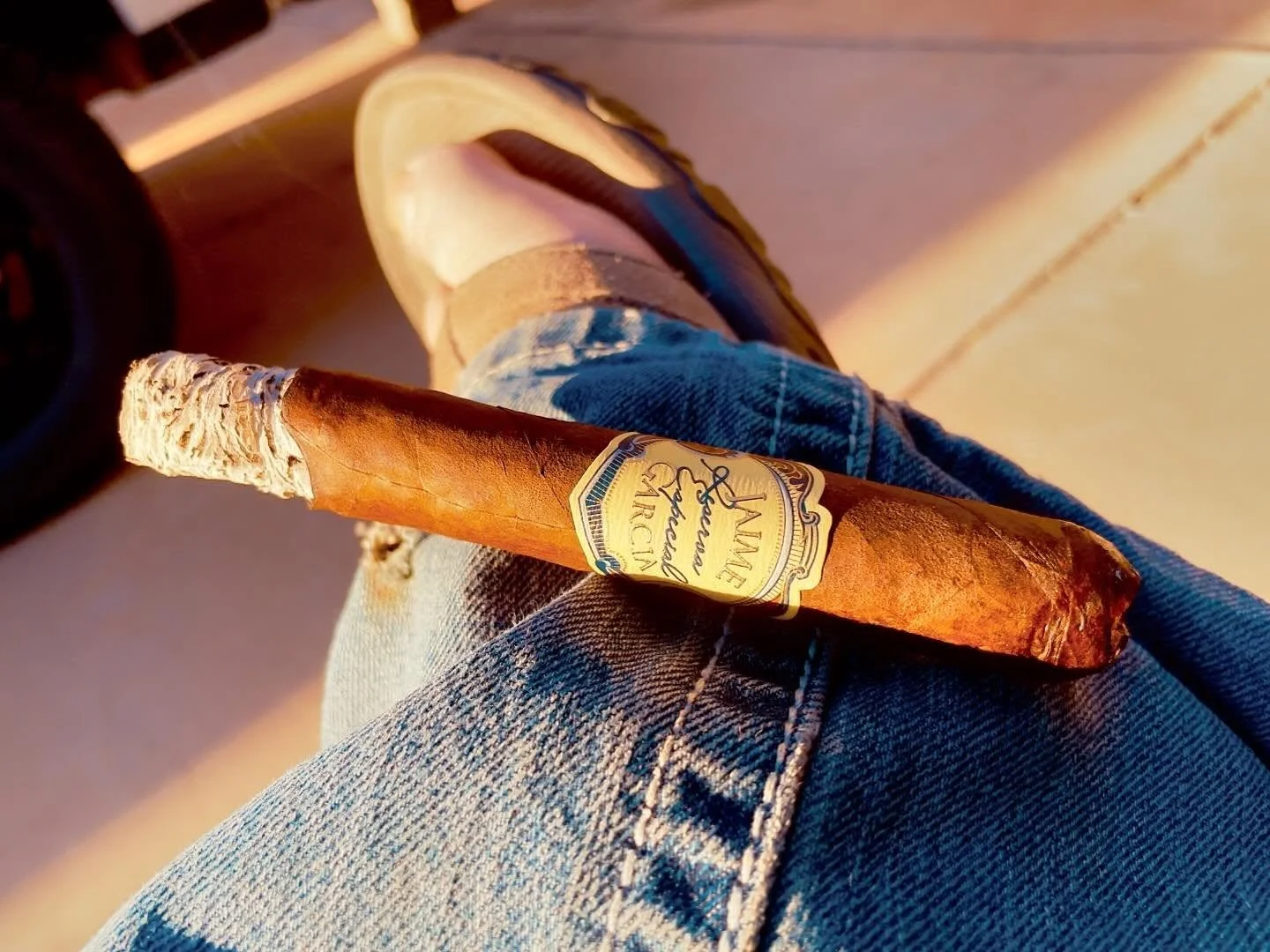
A cigar was selected. A drink might be poured. The porch became occupied.
The Smoking Lamp was lighted.
But repetition has a way of turning a phrase into a ritual.
Eventually it stopped meaning simply “I am going to smoke a cigar.”
It meant something closer to:
We are secure from the day.
The laptop can close.
The phone can sit on the table without being consulted every thirty seconds.
Whatever problem seemed urgent at three o’clock will probably remain perfectly capable of being a problem tomorrow morning.
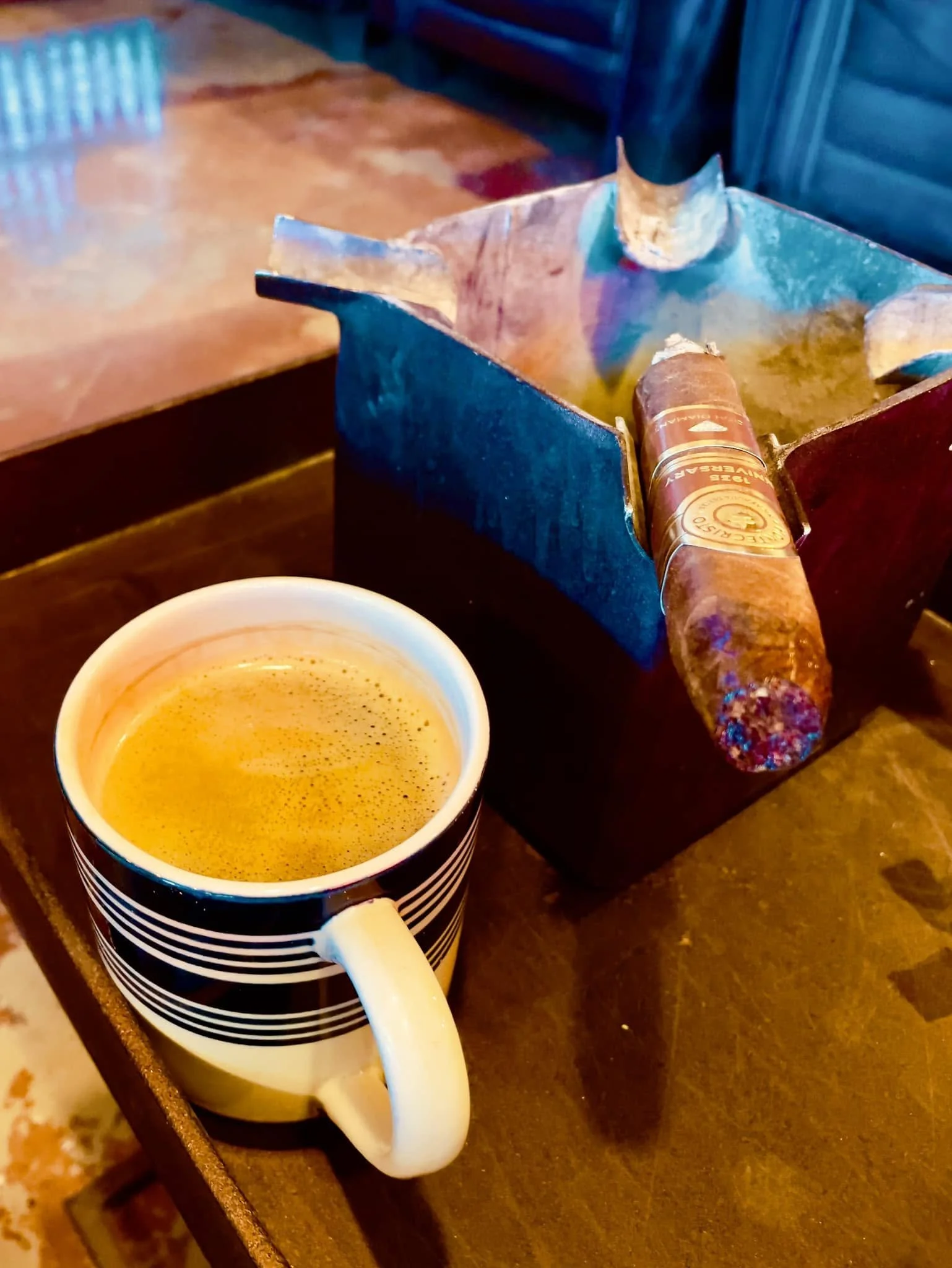
There may be bourbon in the glass. There may be coffee instead. There may be music playing quietly somewhere in the background. There is frequently a German Shepherd conducting an unauthorized inspection of the proceedings.
Sometimes someone else is sitting there.
Sometimes nobody is.
The cigar is almost secondary.
The important thing is that the pace changes.
For an hour or so, nobody is required to optimize anything.
Why Keep the Phrase?
Because rituals are useful.
Modern life is remarkably poor at telling us when something is finished. Work follows us home. Email follows us into restaurants. Phones accompany us onto porches, into hotel rooms, across oceans, and occasionally into places where they have absolutely no business being.
There is always another message.
Another task.
Another headline.
Another thing somebody somewhere has decided requires immediate attention.
The old sailors had watches, bells, commands, and evolutions. Certain things began and certain things ended.
The Smoking Lamp provided one of those boundaries.
At Shale House, it still does.
Lighting it creates a small line between obligation and reflection.
That is probably why the expression fit so naturally here.
Shale House has never really been about cigars, although we certainly seem to have accumulated enough of them to create contrary evidence.
It is about the things that tend to happen around them.
Stories get told.
Trips get planned.
Old trips get remembered.
Problems occasionally become less important after bourbon.
Friends sit longer than they intended.
Books get discussed.
Bad ideas improve considerably.
Good ideas become expeditions.
And sometimes nobody says much of anything.
That counts too.
The Lamp Travels
The physical lamp is imaginary now.
That may be its greatest advantage.
It can be lighted on an Alaskan porch on a cold autumn evening.
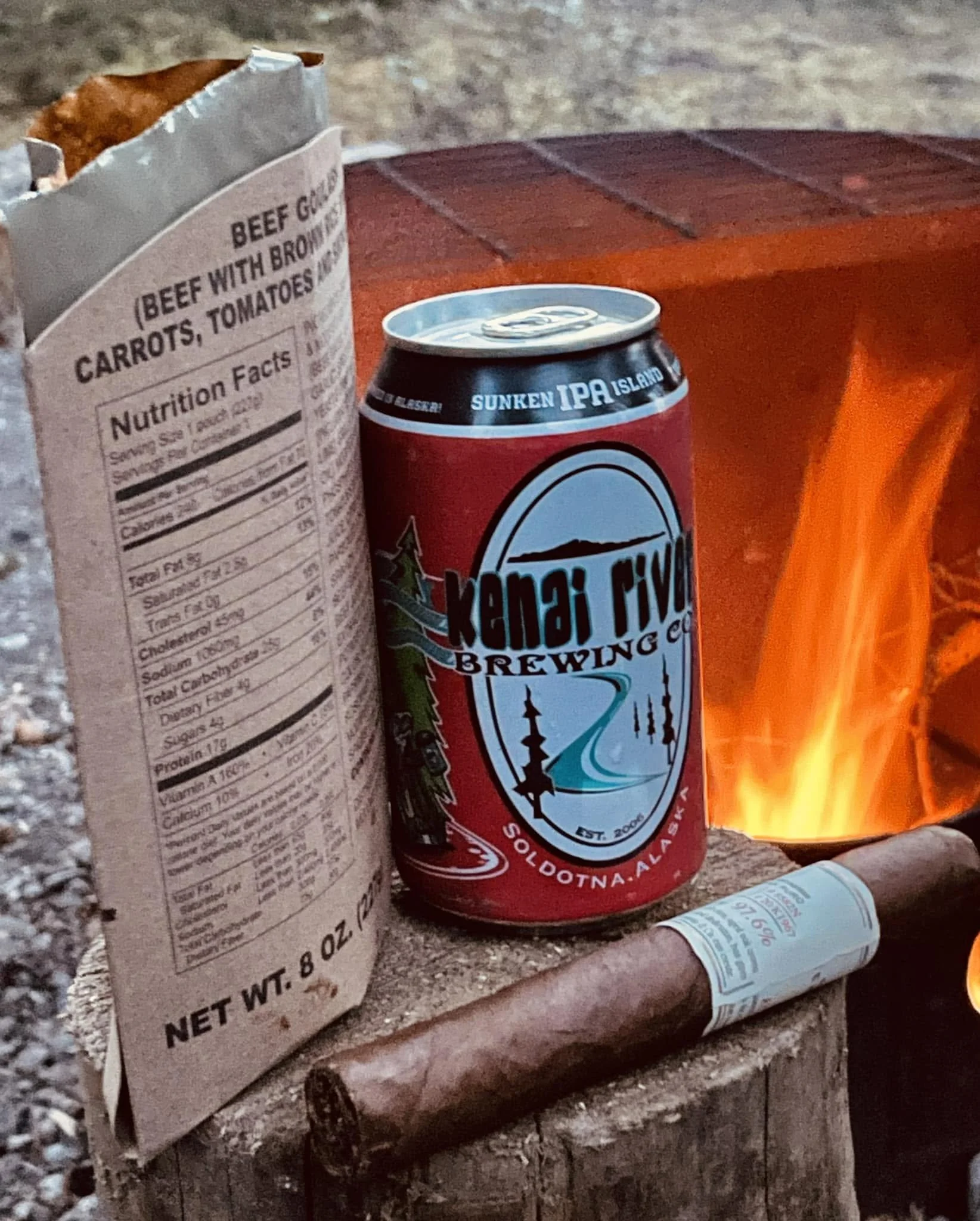
It can be lighted beside a hunting camp after the rifles have been put away.
It can be lighted outside a lodge after a day in the field.
It can be lighted in a cigar room thousands of miles from home, after wandering into an old tobacconist and asking the person behind the counter what they would smoke.
It does not even strictly require tobacco.
The Smoking Lamp has become less an object than permission.
Permission to stop.
Permission to sit.
Permission to open the good bottle.
Permission to tell the story again.
Permission to remember someone who should still be sitting in the empty chair.
Permission, occasionally, to do absolutely nothing useful.
The sailors who once gathered around an oil lamp in the forecastle would probably recognize the principle.
The work was done for the moment.
The dangerous business was secured.
The lamp was lighted.
The men gathered.
And for a little while, they smoked.
Centuries later, that is still a pretty good idea.
At Shale House, we have simply expanded the authorized area.
The Smoking Lamp is lighted.
Pull up a chair.