The Communist Bag Diaries — Montreal
A Soviet gas-mask bag, a small Olympus camera, and a business trip to Montreal. What began as a practical answer to a camera-bag problem turned into a field report on rain, old streets, good tobacco, and the moments that stay with you after the work is done.
A Cold War surplus bag makes its first trip: from its unlikely beginnings at Shale House to rain-soaked Montreal, a Leonard Cohen mural, a memorable meal, and two cigars worth bringing home.
Entry No. 1: Origins and the Montreal Mission
Field Notes | Before the Montreal trip
Communist Bag Diaries? WTF is that? Some sort of rip-off of Che Guevara's memoirs?
Nah. Nothing quite that revolutionary.
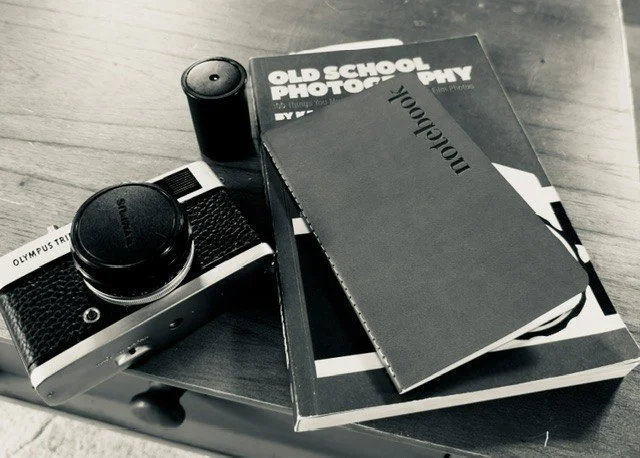
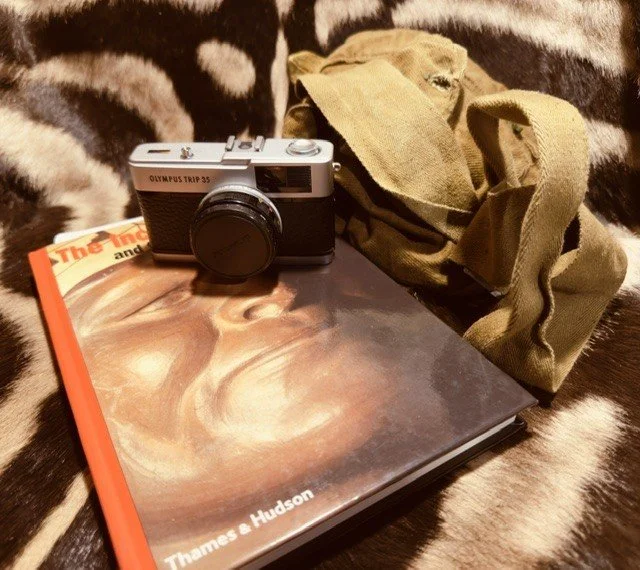
It started when I decided to get back into 35mm photography. I'd recently bought an old, refurbished Olympus Trip 35 and needed something to carry it around in. Simple enough, right?
Well, apparently not.
I started looking at camera bags. There were high-dollar leather cases with enough compartments for thirty lenses, a small photography studio, and possibly an RPG round. Then came the high-tech Cordura bags, all straps, buckles, and tactical-looking nonsense. If you know me, you know that's not really my style. Amazon was happy to suggest another three hundred options. None of them interested me.
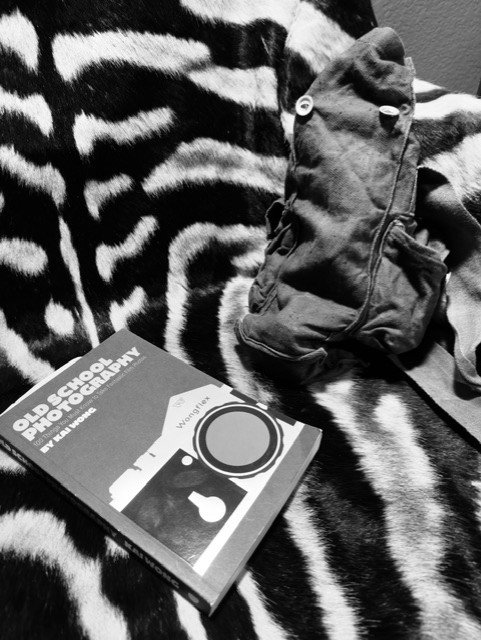
Then, while poking around Etsy for military surplus, I stumbled across a little piece of Cold War history: a genuine 1970s Soviet military gas-mask bag, reportedly sitting in a Ukrainian military warehouse since the glory days of the Soviet Empire.
Now we're talking.
As a former member of the oldest drinking club in America with a gun problem, I have a certain appreciation for military equipment, particularly the old stuff. Things built for a purpose, without much concern for aesthetics, comfort, or whether the end user particularly liked it.
This little piece of Soviet history seemed like just the thing for my Trip 35 to ride around in during expeditions and business trips.
Canvas. A well-worn design. Aluminum buttons. Seriously? Aluminum?
Then again, we're talking about 1970s Soviet manufacturing at its finest: everything made from the cheapest materials available, yet somehow engineered to survive a zombie apocalypse. Sort of like the AK-47.
I placed the order.
It took a few weeks to arrive from Ukraine. I'm assuming this particular item wasn't considered critical war material. Probably the Ukrainian Army had moved on to high-end Gucci gear made from Cordura and ballistic nylon, leaving the old Soviet canvas equipment for people like me.
Eventually, a well-traveled envelope arrived at Shale House.
Unpacking the Soviet Empire
I slit through approximately ten layers of cellophane tape, reached inside, and pulled out a plastic bag containing my latest acquisition.
Brand new!
And there it was: that familiar mothball smell found in military storage facilities around the world. If you've ever served, you know the smell. There's nothing quite like it.
One whiff and I was suddenly back at Marine Corps boot camp in 1989, receiving my first issue of utilities and field gear. Funny how something as simple as a smell can drag you backward through nearly forty years of memories.
But I digress.
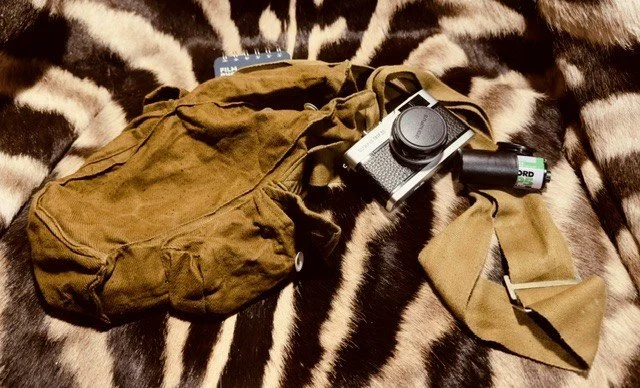
The bag was a lovely shade of Soviet green, stiff from decades of storage, and smelled like enough mothballs to preserve Lenin himself.
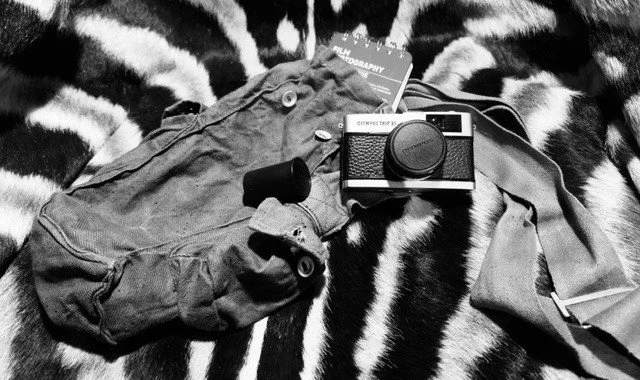
Naturally, the first order of business was to see whether the Olympus would fit. I grabbed the little Japanese camera, slid it inside, and...
Perfect fit!
Even better, the two exterior pouches originally meant for gas-mask filters and cleaning equipment could each hold two rolls of 35mm film. The main compartment had enough room for the camera, a small notebook, a duster, a lens cloth, and a pen.
Not much else. Excellent.
There was no room to overload myself with Gucci gear, unnecessary gadgets, or equipment I'd probably never use. Just enough space for honest working gear to support my photographic endeavors.
Sometimes less really is more.
Indiana Jones, Nick Nolte, and Soviet Laundry Instructions
It took a little futzing around to get the bag to hang properly at my side. And yes, it's a satchel. Indiana Jones carried one.
Once I had everything adjusted, it felt just right. Not particularly heavy, but substantial enough to remind you it was there. It carried what I needed and, more importantly, didn't have room for what I didn't need.
I'm a simple guy.
I wandered around Shale House wearing it for a while, getting accustomed to the fit and adjusting the strap. At one point, I imagined myself as Nick Nolte in Under Fire, photographing a firefight somewhere in Central America while dodging bullets and trying to capture that one perfect shot.
In reality, I was wandering around the house with a fifty-year-old Soviet gas-mask bag and a Japanese point-and-shoot camera.
Close enough.
There was one remaining issue. The bag needed a good washing. Who the hell knows what chemicals the Soviets treated their military canvas with in the 1970s? For all I knew, the thing had been soaked in something that would set off every security sensor between Anchorage and Montreal.
I could already imagine the conversation at the airport: “Mr. Miller, our sensors are detecting Chernobyl-level radioactivity coming from your camera bag. Would you mind explaining that? And while we're at it, why are you glowing in the dark?”
Probably best to avoid that particular conversation.
Into the washing machine it went.
It emerged a lovely shade of Afghanistan War brown, considerably softer, and ready for service. Apparently, that's what the vintage crowd calls patina.
I call it faded.
And maybe I shouldn't have washed it in hot water.
Anyway, I'm a guy. What can you expect?
Still, I rather liked the result. The bag had lost its stiff, warehouse-fresh appearance and now looked like something that had actually been somewhere.
Here was a piece of Soviet military craftsmanship originally designed to carry a gas mask meant to protect some poor conscript from the silent killer of chemical warfare. Half a century later, it was serving as an expedition-ready camera bag for an American Marine veteran.
Somewhere, a Soviet quartermaster is probably shaking his head.
I stood there admiring my acquisition. Not bad. Plenty of room, but not enough to overload. Simple construction, functional compartments, and seemingly tough enough to handle whatever I had planned for it.
Now I just needed somewhere to take the damn thing.
Operation Montreal
As luck would have it, I had an upcoming business trip to Montreal. Perfect opportunity.
I figured it would be an excellent field test for the new bag: a chance to see whether my minimalist approach to photography would work while traveling, or whether I'd discover some glaring deficiency approximately three thousand miles from home.
While packing, I tucked the Communist Bag into my suitcase among the suits, dress shirts, and other respectable business attire. I briefly wondered what TSA would think if they opened my luggage and found a Soviet military gas-mask bag containing an old 35mm camera.
Then it hit me. Why not turn the whole thing into an espionage side quest?
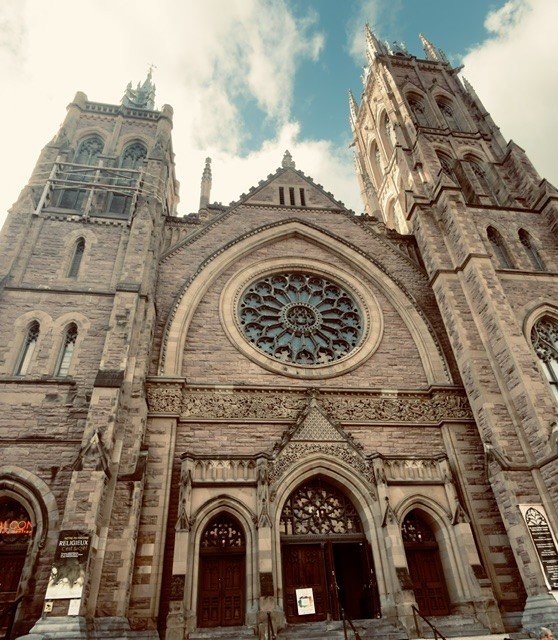
Old Montreal. Narrow streets, stone buildings, historic architecture, and the occasional dark alley. Black-and-white photographs of the old city, color shots documenting the unusual, and a few chances to capture the collision between old and new.
Maybe a rendezvous with another agent in a cigar lounge. Perhaps a clandestine drop somewhere near the docks.
Nothing illegal, mind you. Just a grown man with an overactive imagination, a Cold War surplus bag, and a camera.
The possibilities were endless.
My imagination started running wild, and before long I'd developed the first field test of something I decided to call the Montreal Ten.
The concept was simple: every destination would come with ten randomly generated assignments to accomplish while on location. Nothing elaborate or expensive. Just small missions designed to encourage exploration, observation, and a little spontaneity.
An unplanned photograph. An unusual piece of architecture. A conversation. A menu, receipt, or ticket stub collected as intelligence. Something discovered by taking a different street instead of the obvious route.
Little things that might otherwise go unnoticed.
The Montreal Ten would be the first operational test, adding a little fieldwork to what might otherwise have been a routine business trip.
Of course, I still had actual work to do: meetings, presentations, and all the other responsibilities that come with being a respectable corporate traveler.
But once the workday ended?
The operative would be free to roam.
And somewhere in Old Montreal, there was a restaurant, a cigar lounge, and perhaps a glass of something worth remembering.
With the suitcase packed, the Olympus secured, and the Communist Bag ready for its first deployment, I was officially prepared for Operation Montreal.
All that remained was getting there: twelve hours of flying, multiple airports, tight connections, and the inevitable airborne shuffle between gates.
The glamorous life of an international operative.
Next stop: Montreal.
Entry No. 2: Rain and Carré
Thursday, October 8, 2026
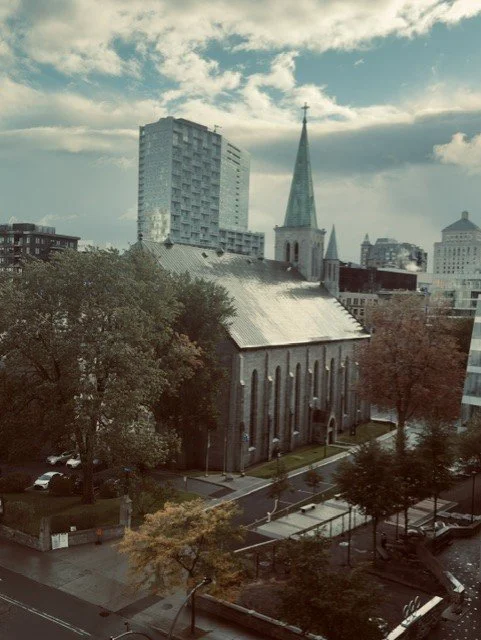
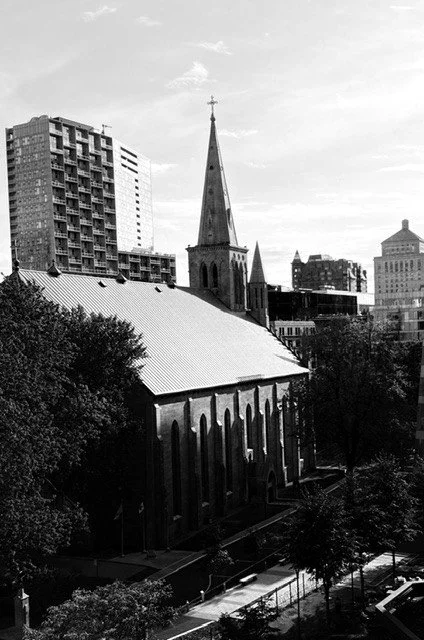
Thursday morning, Montreal was being rinsed clean. Rain came down hard enough to send people hurrying between doorways, umbrellas tilted and heads down. Melissa and I walked toward the office through a city that seemed to be moving in two directions at once: old granite and patinaed copper on one side, glass and concrete on the other.
At the corner, the red Tim Hortons sign reflected on the wet sidewalk. It was a small thing, but it caught the eye. I had the Olympus Trip 35 in the Communist Bag, a notebook tucked beside it, and my fountain pen loaded with green ink. The city was already offering more than one reason to slow down and look.
The workday had its own assignment. I delivered three sessions on Psychological Safety and Risk, and two vice presidents joined us. It was good to have that level of leadership in the room for a conversation about safety. For a few hours, the camera and the Montreal Ten stayed in the bag while I did the work I had come to do.
By the time the sessions were behind me, the rain had made a companion of the city. Montreal wore it well. The old stone looked darker, the copper roofs deeper in color, and the modern buildings caught the low light in broad sheets of gray.
There is a point in a work trip when the day's obligations are finally done and the place around you begins to come back into focus. The walk, the weather, the storefronts, the small details that would have disappeared if I had gone straight from office to hotel. Montreal kept asking me to pay attention.
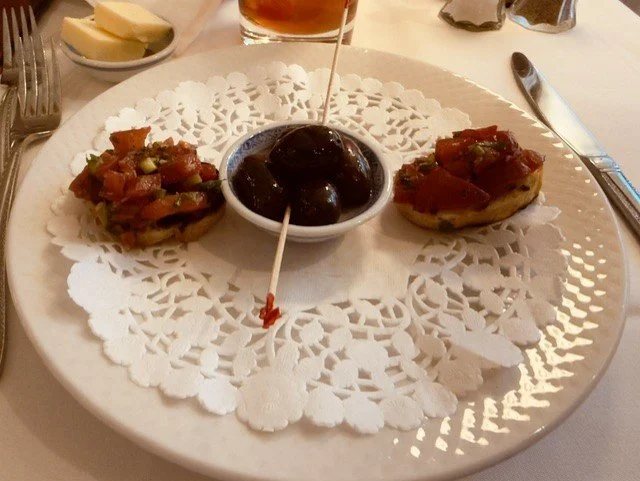
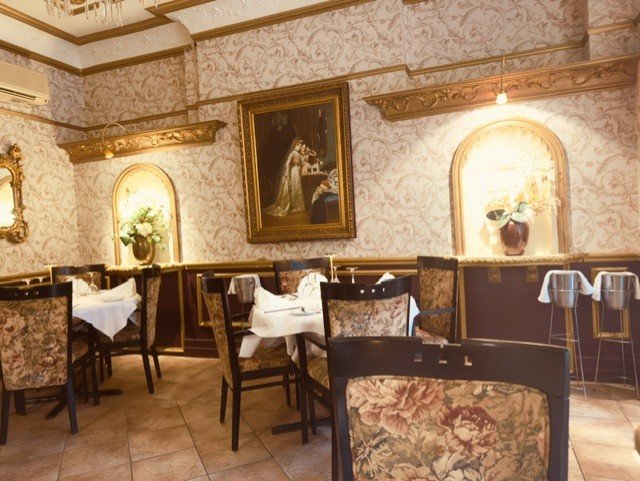
That evening, the day ended at Carré. The restaurant gave the rain somewhere to stay outside and the two of us a place to put down the workday. I don't remember the city becoming quieter; I remember my attention shifting. For the first time since morning, there was no session to deliver and no slide to advance. There was only the table, the conversation, and the pleasure of being somewhere new.
The Montreal Ten was never a checklist to conquer. Curiosity was authorized; completion was not. Thursday had given me rain, an office full of people willing to talk about psychological safety, and a walk through a city that held old stone and new glass in the same frame. Carré was a fitting place to let the day end.
Entry No. 3: Beneath Leonard’s Watchful Gaze
Friday, October 9, 2026
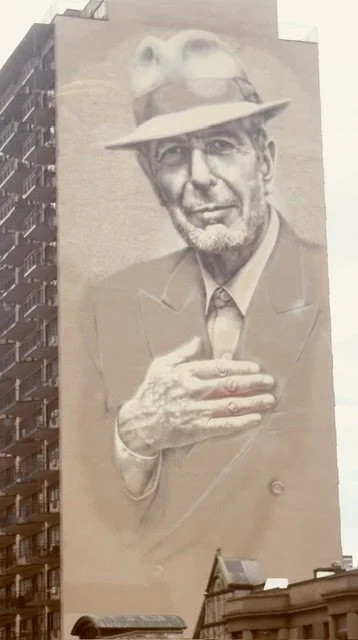
By Friday, Montreal had begun to feel less like a place I was visiting and more like a city I was learning to read. A few turns through Old Montreal brought me beneath Leonard Cohen's watchful gaze. The mural seemed to belong there: steady, observant, and completely at home in a city that wears its history out in the open.
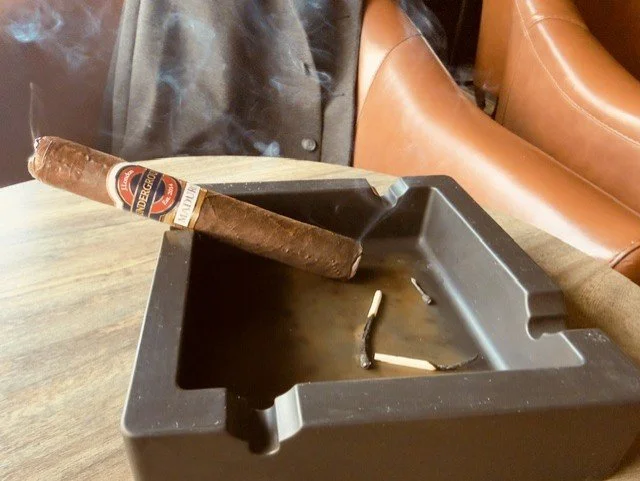
Stogies was part of the plan, though the first time I passed the door it was still locked. I kept moving and came back later. By then the place was open, and the evening began to take its shape.
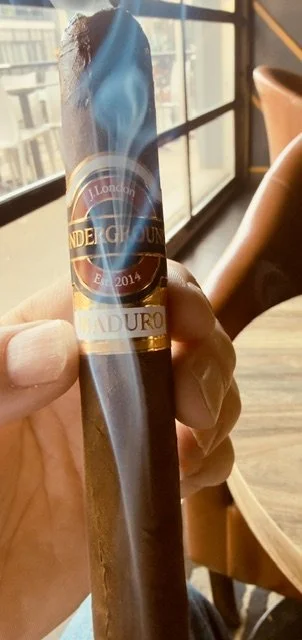
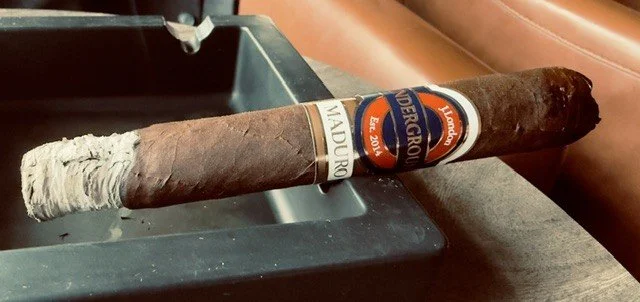
The first cigar was a J. London Underground Maduro. It was a new name to me, and it turned out to be a fine discovery. Paired with Diplomático rum, it opened with good flavor and settled into an easy, satisfying smoke. I rated it 9 out of 10 and liked it well enough to buy one to bring home.
The lounge had the kind of life that makes a traveler stay longer than planned. Conversations drifted between languages I understood and others I didn't. Music from the 1980s played somewhere behind the bar, reaching straight back to the years when those songs were part of the soundtrack of my life. There were good cigars, excellent libations, and no particular reason to hurry.
Somewhere in Montreal, beneath the watchful gaze of Leonard Cohen, a good cigar was making a convincing argument for becoming a great one.
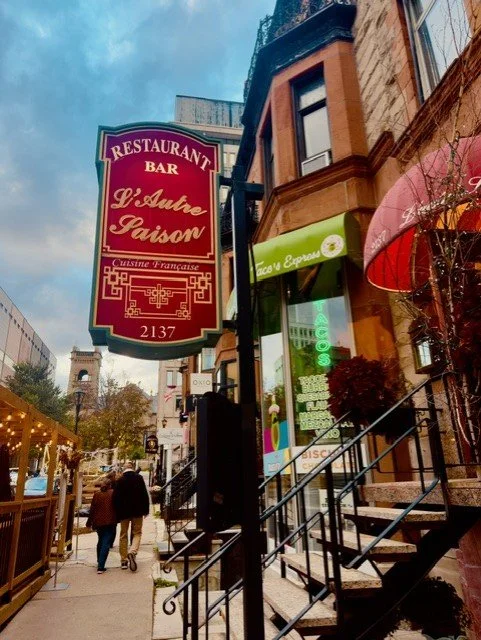
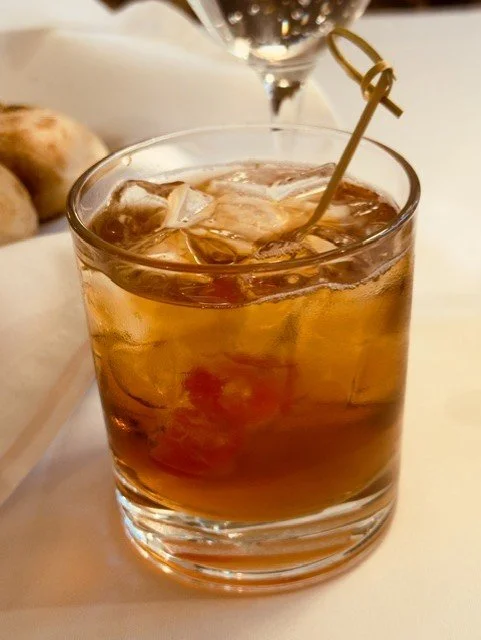
After Stogies, I made my way to L’Autre Saison. Kazim, one of the owners, helped guide the evening. I started with an Old Fashioned that was excellent without being too sweet, followed by escargot. It was everything. For the main course, I took Kazim's recommendation: veal filet with mushrooms and a sauce, with a Bordeaux alongside.
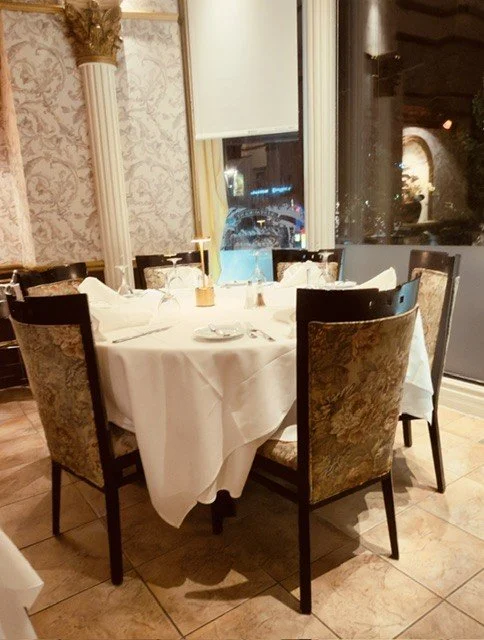
The pianist played somewhere behind me as I lingered over a glass of Tawny Port, rich with the taste of raisins. Beyond the window, neon signs illuminated the boulevard, and Montréal carried on with its Friday evening. It could have been a scene from Casablanca. I found myself wishing Mel were sitting across from me.
For the first time in longer than I could remember, work hadn't crossed my mind. Instead, there were old friends, familiar songs, affectionate thoughts of my wife, and conversations carried across the miles. Somewhere between the tobacco smoke and the music, I realized something rather wonderful. I was relaxed. There was nothing to accomplish, nobody to impress, and nowhere I needed to be.
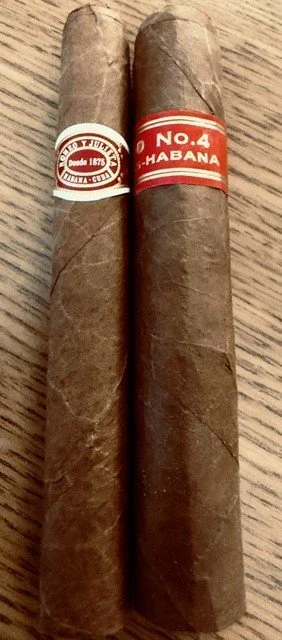
After dinner, I returned to Stogies. Josh, the tobacconist, and I had spent time talking about the cigars I already loved—My Father Le Bijou 1922 and Perdomo Habano Maduro—and my desire to try something that wasn't already waiting in my humidor. He recommended Dunbarton Tobacco & Trust's Sin Compromiso.
I lit it with a wooden match. The initial light was excellent. Pepper came first, then eased quickly into a steady, balanced flavor. The burn started a little uneven, corrected itself, and stayed consistent through the final quarter. No harsh heat, no bite—just a good cigar that kept giving me a reason to stay with it.
Emma was serving that night. I settled in with a double Diplomático and let the cigar do what a good cigar should: slow everything down. The Sin Compromiso earned a 9 out of 10 and a place among the cigars I'd happily buy again.
The city was still there when I finally left. So was the music, and the taste of rum, and the easy conversation of a room full of people who had arrived from different places and found common ground in a shared ritual. I walked back to the hotel with the Communist Bag, the camera, and one more cigar for the road.