A Field Rifle
There was a time when going somewhere required considerably more imagination.
A safari began months before anyone boarded an airplane. Letters went back and forth to an outfitter in Nairobi, each making its own leisurely journey across an ocean. Dates were discussed. Animals were considered. Rifles and ammunition were settled upon. Somewhere along the way, a deposit disappeared into the post and eventually another envelope returned bearing confirmation that, on a certain date in a distant country, somebody would be waiting.
Alaska could begin just as mysteriously.
Perhaps it was a small advertisement discovered in the back pages of Alaska Geographic. A guide with a Super Cub and a remote lake promised moose country beyond the roads. Maps were unfolded across tables. Equipment lists were studied. Questions were asked and answers arrived days or weeks later.
There was time to wonder.
Time to imagine the country.
Time to prepare.
And somewhere during those months, the rifle would come out of its case.
Leather. Canvas. Gun oil.
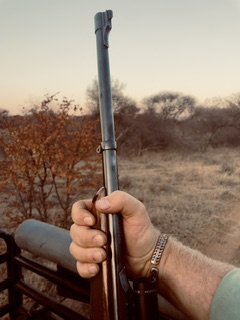
Walnut and blued steel.
The rifle would be checked and handled, taken to the range, cleaned and returned to its case to wait. It wasn't simply another piece of equipment packed the night before departure. It became part of the anticipation.
The Ruger No. 1 belongs to that world.
Not because it is particularly ancient, nor because modern rifles are somehow lesser things. Modern rifles are lighter, extraordinarily accurate and remarkably capable. Carbon-fibre barrels, composite stocks, sophisticated optics, rangefinders and ballistic computers have expanded what a rifleman can accomplish in the field.
But capability and romance are different measurements.
The No. 1 asks us to remember that.
Walnut and Steel
Take it from the case and there is an immediate solidity to the thing.
Steel has weight. Walnut has warmth. The falling block closes with the mechanical certainty of a bank vault.
Nothing about it suggests a laboratory.
Its ancestry belongs to drafting tables, sharpened pencils and men who believed a sporting rifle should possess both purpose and proportion. The design reaches backward toward the great falling-block rifles of another century without pretending to be a reproduction of one.
There are prettier rifles.
There are bespoke rifles with magnificent walnut, hand-cut engraving and the fingerprints of craftsmen whose work properly belongs among the gunmaker's arts.
The Ruger isn't one of them.
Its beauty is closer to that of a good axe, a well-used fly rod or an old pair of leather boots. It is an object made properly, maintained carefully and intended to be used for the purpose for which it was built.
It is a beautiful tool.
And a tool should eventually acquire some marks.
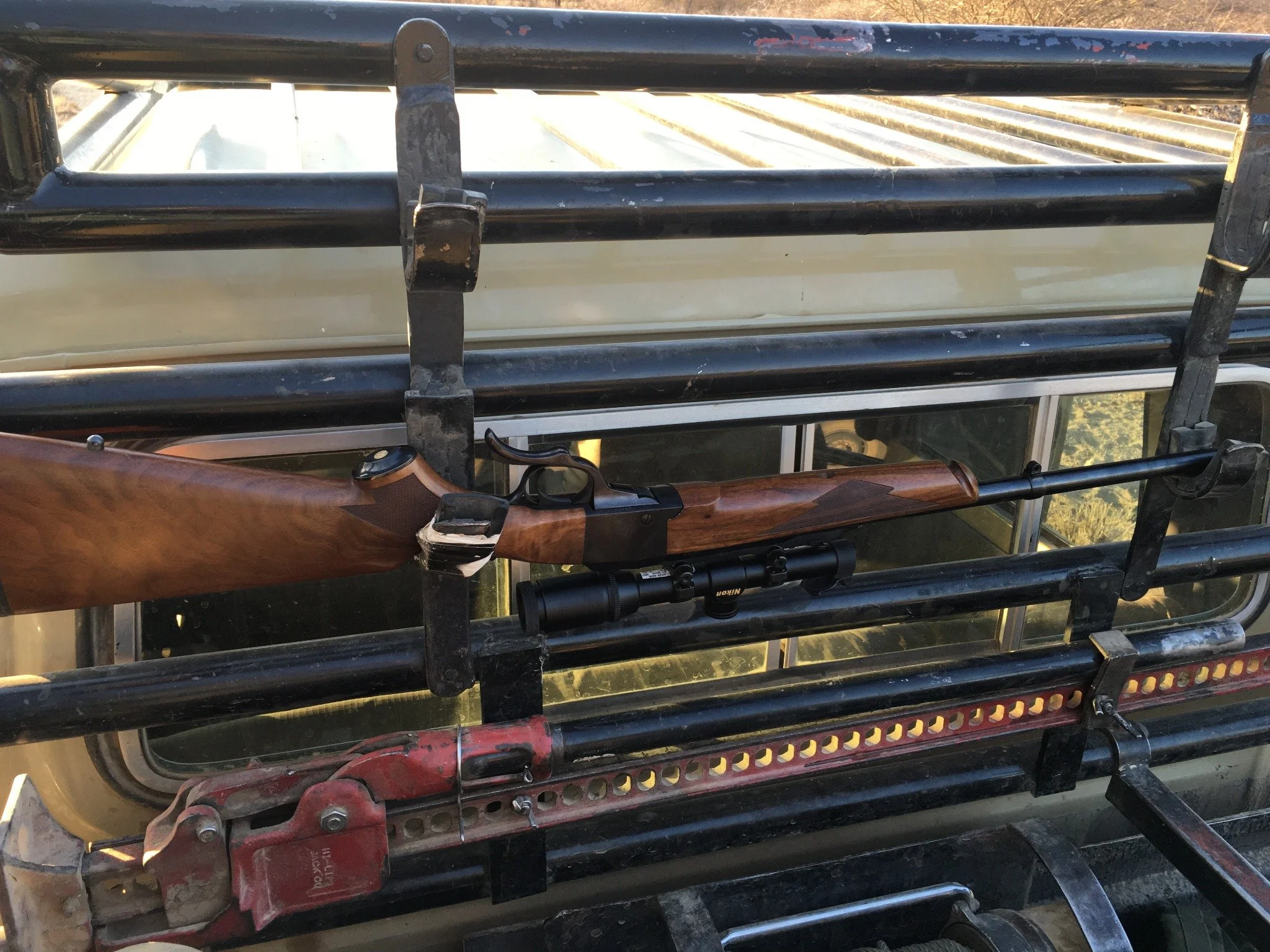
A proper field rifle will gather scratches in the stock, worn bluing around the edges and small scars whose origins may eventually be forgotten. A truck contributes one. A gun rack another. African thorn is particularly good at leaving its signature. Alaska provides alder, spruce, rain and rock.
Leave a rifle in the safe and none of this happens.
But then nothing else happens either.
An Old African Cartridge
The 9.3×74R completes the picture.
Long, tapered, rimmed and unmistakably European, the cartridge looks more at home in a leather cartridge wallet than in a box of modern ammunition.
It comes from another age.
The cartridge has spent well over a century working through Europe and Africa, acquiring the sort of reputation that cannot be created by an advertising campaign. It has been used on animals ranging from ordinary plains game to Cape buffalo, and despite generations of newer cartridges appearing around it, the old 9.3 continues quietly about its business.
There is little reason to turn this into another catalogue of velocities, energies and ballistic coefficients. There are thousands of places better suited for that discussion.
A 250-grain bullet works.
The traditional 286-grain bullet works exceedingly well.
A 300-grain solid works when circumstances call for one.
The animals settled that argument a long time ago.
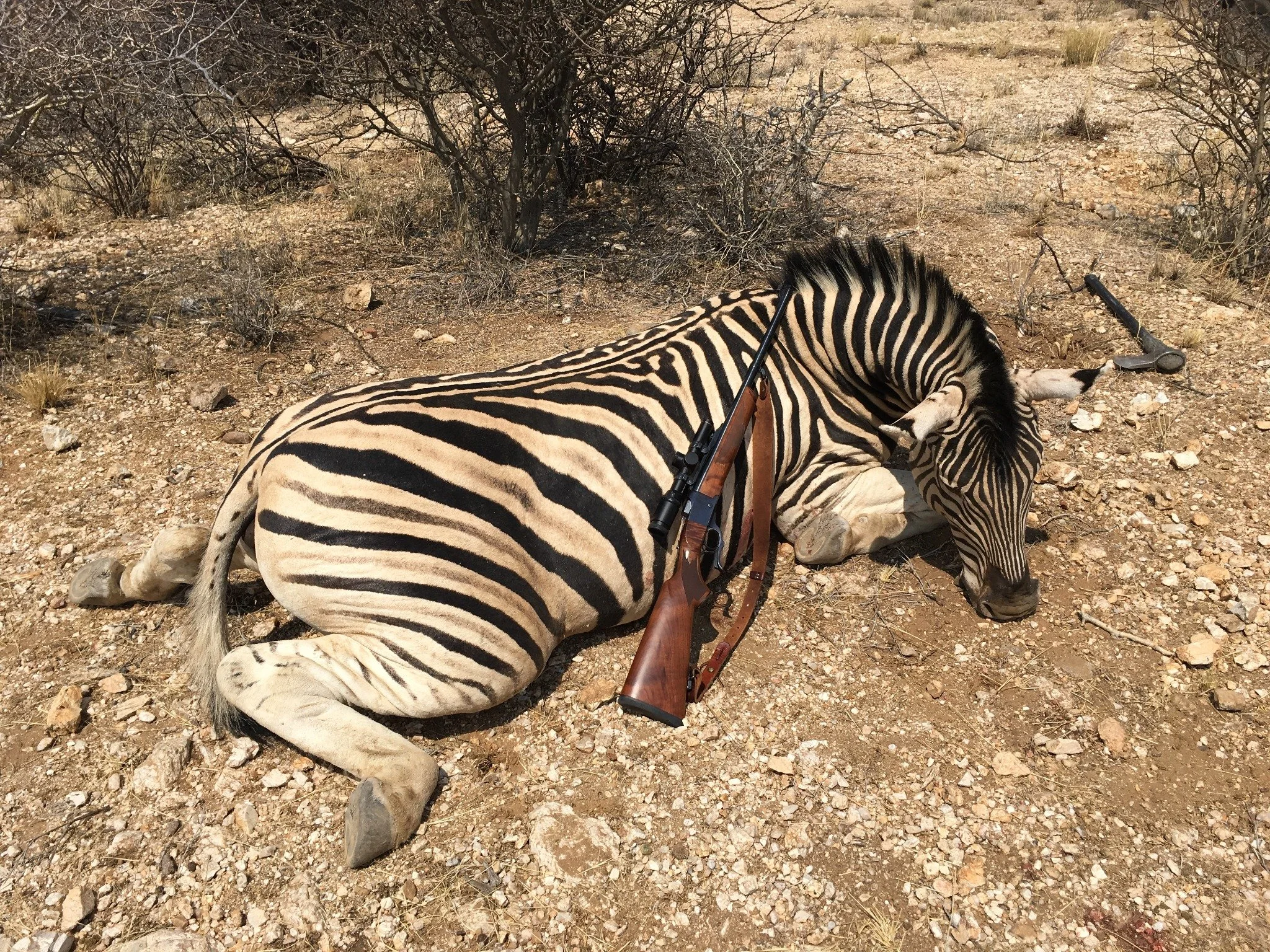
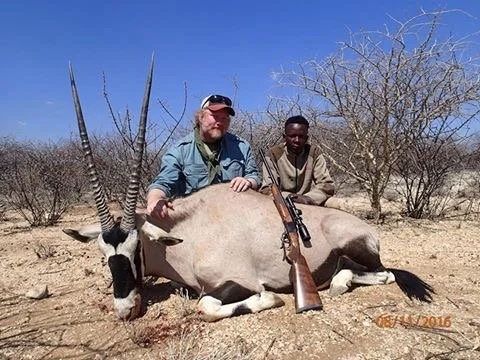
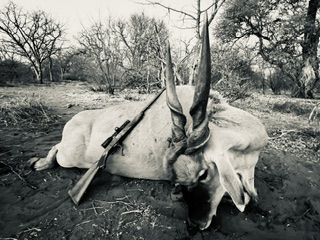
Kudu. Gemsbok. Nyala. Eland. Zebra. Impala. Blesbok. Wildebeest.
This particular rifle has encountered them all.
It has also traveled north to Alaska for black bear, exchanging thorn and dust for spruce, wet brush and cold mornings.
The old cartridge seems equally unconcerned by either continent.
One Shot
There will always be someone who points out that the Ruger No. 1 is a single-shot rifle.
This is usually said as though Ruger somehow failed to notice.
The limitation is obvious.
So is the bargain.
A lever falls. The breech opens. The long rimmed cartridge slips into the chamber. The lever closes.
One cartridge.
One rifle.
One opportunity to do things properly.
A second cartridge can be inserted surprisingly quickly by someone accustomed to the rifle, but that isn't really the point.
There is no magazine full of reassurance beneath the action.
The No. 1 asks something of the hunter. Get close enough. Become steady enough. Wait long enough.
Make the first shot count.
Perhaps there are worse habits for a rifle to teach.
A Four-Power World
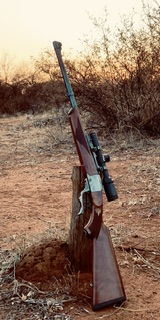
This rifle wears a Nikon Monarch 1–4× scope.
By modern standards, that is hardly an impressive number.
Good.
Africa rarely presents itself as a shooting range. Animals appear between trees, stand partly obscured in thorn, cross openings and occasionally materialize much closer than expected.
Most shots are comfortably inside 200 metres.
At those distances, enormous magnification matters considerably less than finding the animal quickly.
At its lowest setting, the little Nikon makes the rifle remarkably fast in thick country. At four power, there is enough glass for the distances at which the 9.3×74R does its best work.
There is something appealing about a scope that does not require an instruction manual.
The factory iron sights are another matter. They work, but they have never been one of the rifle's great virtues. Ruger's fixed safari-style sights, as fitted to some other versions of the No. 1, are much better suited to the character of the rifle.
On a proper field rifle, iron sights aren't decoration.
They are what remain when something else stops working.
Look at the Country
Perhaps one of the great pleasures of carrying the No. 1 today is what it does not require.
The telephone can stay in the pocket.
There is no application to open. No ballistic solver to consult. No electronic firing solution to wait for and no turret demanding to be fiddled with before the rifle can be fired.
Look through the glass.
Then look at the country.
A rock of roughly known size gives some indication of distance. So does a tree, the height of an animal or simply the accumulated experience of having looked across enough country to know whether something is one hundred yards away or two.
The wind is there to be read.
Watch the grass around the animal. Look at the leaves. Feel what is moving against the cheek. Notice whether the wind where you stand is doing the same thing as the wind where the animal stands.
Then remember the rifle.
Know where it is sighted. Know where the bullet will be at one hundred yards and where it will be at two hundred. Know the hold when the distance stretches. Know the rifle well enough that those things have become memory rather than information that must be retrieved.
Most importantly, know when the shot remains comfortably within your ability and when it does not.
There is satisfaction in making those judgments quietly while looking through the glass.
They keep the hunter engaged with the landscape rather than temporarily withdrawing from it to consult a screen.
The No. 1 asks you to pay attention.
To the animal.
To the wind.
To the distance.
To the country.
The Romance of the Thing
And there is romance in all of this.
It would be foolish to deny it.
A No. 1 resting across the hands has the peculiar ability to make the imagination wander.
Look at it long enough and Africa appears.
Hot dust beneath the boots. Thorn pulling at a shirtsleeve. The smell of canvas in camp. A long stalk through broken country and the sudden grey shape of a kudu standing impossibly still in brush you had been staring into for several minutes.
The Grey Ghost.
The rifle comes naturally to the shoulder.
The scope is at one power.
Nothing needs to be dialed.
The world has suddenly become very small.
Look again and the landscape changes.
Heather. Bog. Rock.
Drizzle blowing sideways across a Scottish glen. Wet leather and cold hands. Somewhere above, nearly invisible against the hillside, stands a stag.
The Monarch of the Glen.
Turn west and another older world appears: horses, canvas bedrolls and Roosevelt country, where a hunt might mean leaving the railroad behind and disappearing into the mountains for weeks.
It is easy to romanticize such times.
We remember the steamships and canvas tents more readily than malaria, unreliable communication and equipment that failed far more often than modern equipment does. There is no virtue in pretending the past was something it wasn't.
Nor is there anything wrong with carbon fibre, satellite communication or knowing precisely where you are.
Those things have made the wilderness considerably safer.
But something was inevitably surrendered along the way.
Uncertainty.
Anticipation.
The long interval between deciding to go and actually arriving.
Six months of letters exchanged with an outfitter in Nairobi before stepping onto the ship or aeroplane. A small advertisement in the back of a magazine offering an Alaskan moose hunt from a lake whose name meant nothing until a finger finally found it on a map.
There was time for distant places to become enormous in the imagination.
We cannot recreate that world.
But occasionally we can carry something that reminds us of it.
The Armory
Every rifle kept long enough should eventually justify the space it occupies.
Some reach far.
Some carry lightly.
Some belong in the mountains.
Others are kept for the unpleasant possibility that something large and angry may need to be stopped at very short distance.
The Ruger No. 1 in 9.3×74R occupies another place.
It is the rifle for walking into country where the precise nature of the day has not yet been decided.
Enough rifle for very large animals. Handy enough for thick bush. Accurate enough for the distances that matter. Simple enough that there is very little to discuss once the cartridge is chambered.
And it asks something in return.
Carry the weight.
Learn the rifle.
Judge the distance.
Read the wind.
Get closer.
Make the first shot count.
Put another scratch in the walnut and remember where it came from.
There are lighter rifles.
There are flatter-shooting cartridges.
There are scopes capable of seeing farther than most hunters have any business shooting.
There are computers that will tell us almost everything.
The Ruger No. 1 offers something increasingly rare.
It leaves something for the hunter to do.
Perhaps that is why, after all these years, the old single-shot still earns its place in the armory.
Open the case.
There is the smell of leather, canvas and gun oil.
Wrap a hand around walnut and steel.
Put a few cartridges in a pocket.
There is country ahead.
A river to ford.
And another mountain to see what is on the other side.
